Reading a brackish-water feed: recovery, TDS and the 2:1 array
Every RO design starts with a number the borewell hands you — feed TDS — and a target you set against it. The relationship between the two shapes the whole skid.
Before any vessel is specified, an RO design begins with a water analysis. Two numbers from it dominate everything downstream: the feed TDS the source hands you, and the recovery you choose to design for. Get the relationship between them right and the rest of the skid follows; get it wrong and the plant either scales up or wastes water.
Why recovery falls as the feed gets saltier
Recovery is the fraction of feed water that leaves as permeate. The temptation is always to push it high — more product, less reject. But as you recover more water, whatever salt was in the feed concentrates into a shrinking volume of brine. Past a point, that concentrate is so saline that sparingly soluble salts (calcium carbonate, calcium sulphate) begin to precipitate on the membrane — scaling — and osmotic pressure climbs so high the pump can't keep up economically.
So the saltier the feed, the lower the recovery a sane design targets:
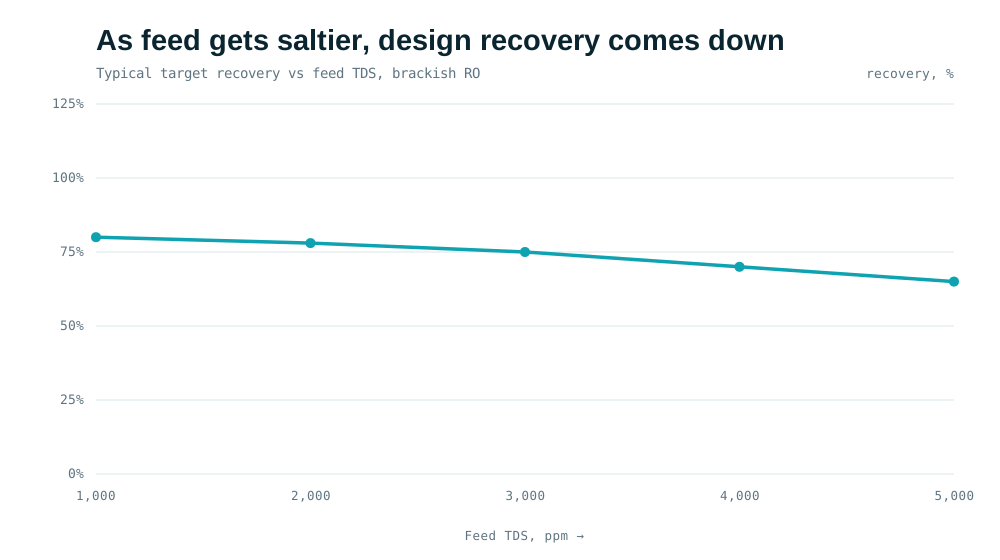
These are starting points, not laws — antiscalant chemistry, temperature and the specific ions present all shift them — but the slope is real. A clean ~1,000 ppm feed might support ~80% recovery; a 5,000 ppm feed is usually designed nearer 65% unless the chemistry is unusually forgiving.
The 2:1 array, and why it exists
If you simply pushed all the feed through one bank of vessels, the last membranes would see a trickle of very concentrated, slow-moving brine — poor flux, high fouling. The tapered (2:1) array solves this. Stage 1 takes the full feed across more vessels; its concentrate — still under pressure and still worth recovering from — feeds a smaller Stage 2.
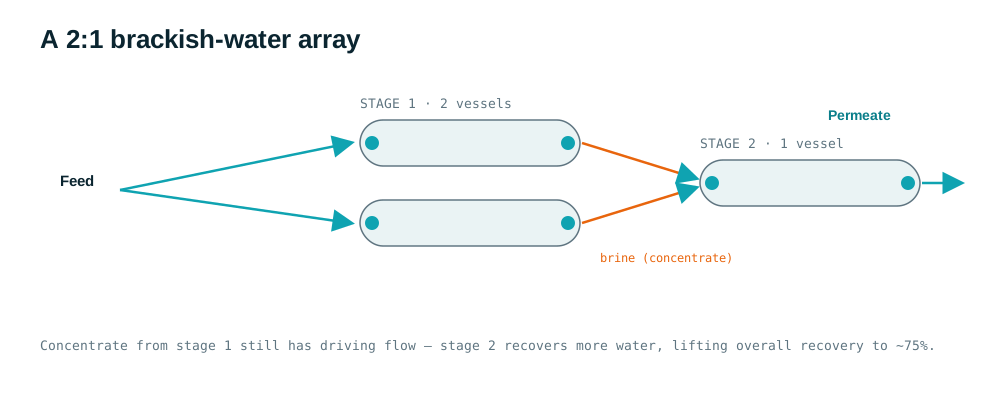
By narrowing the path, the array keeps the cross-flow velocity high enough through every element to control fouling, while lifting overall recovery to the ~75% a two-stage design typically delivers. It is a simple idea doing quiet, important work.
What protects the design once it's running
A recovery target is only safe if the feed actually arrives as assumed. That is the job of pre-treatment and monitoring:
- SDI discipline. Silt Density Index below ~3 at the membranes, held by multigrade and cartridge filtration, keeps colloidal fouling off the leaves.
- Antiscalant dosing. A few ppm of the right antiscalant lets the brine carry more dissolved salt before it precipitates — directly enabling higher recovery.
- Free chlorine to zero. Thin-film composite membranes are intolerant of oxidisers; carbon or metabisulphite removes residual chlorine before it reaches them.
- Salt rejection as a health check. A good brackish element rejects upward of 99% of dissolved salt; watch permeate conductivity creep as an early warning of trouble.
The skid is downstream of the chemistry. Design from the analysis, protect the assumptions with pre-treatment, and the recovery you specified is the recovery you keep.
Reading the analysis, not just the TDS
Total dissolved solids tells you how hard the osmotic work will be; it does not tell you where the plant will fail. For that, read the scaling ions: calcium, magnesium and bicarbonate (carbonate scale), sulphate with barium or strontium (the sulphate scales, which antiscalants fight hardest), and silica, which has a hard solubility ceiling that often sets the recovery limit before anything else does. A Langelier or Stiff–Davis index turns those numbers into a yes/no on whether the concentrate will scale at the recovery you want — and therefore into an antiscalant dose, a softening decision, or a lower recovery target.
Why the array is staged
A brackish skid is usually built as a 2:1 array — two pressure vessels in the first stage feeding one in the second — for a simple hydraulic reason. As the first stage gives up permeate, the volume of water still flowing falls. Feed that reduced flow into the same number of vessels and the cross-flow velocity collapses, letting solids settle and scale take hold on the tail elements. Tapering the array keeps the velocity up across the concentrate's journey, so the back-end membranes stay swept clean even as the water around them gets saltier.
Recovery versus membrane life
Every extra point of recovery saves water and concentrates the scale-formers in the reject a little more. The right number is not the highest one the pump can reach; it is the one that balances the value of the recovered water against membrane life and cleaning frequency for this water. A feed heavy in silica or sulphate is told, plainly, to recover less — and the plant that listens runs for years on the same elements.
None of this is exotic. It is the difference between a plant sized from a real water analysis and one sized from a hopeful round number — and it shows up, years later, in membrane life and in the permeate gauge.